
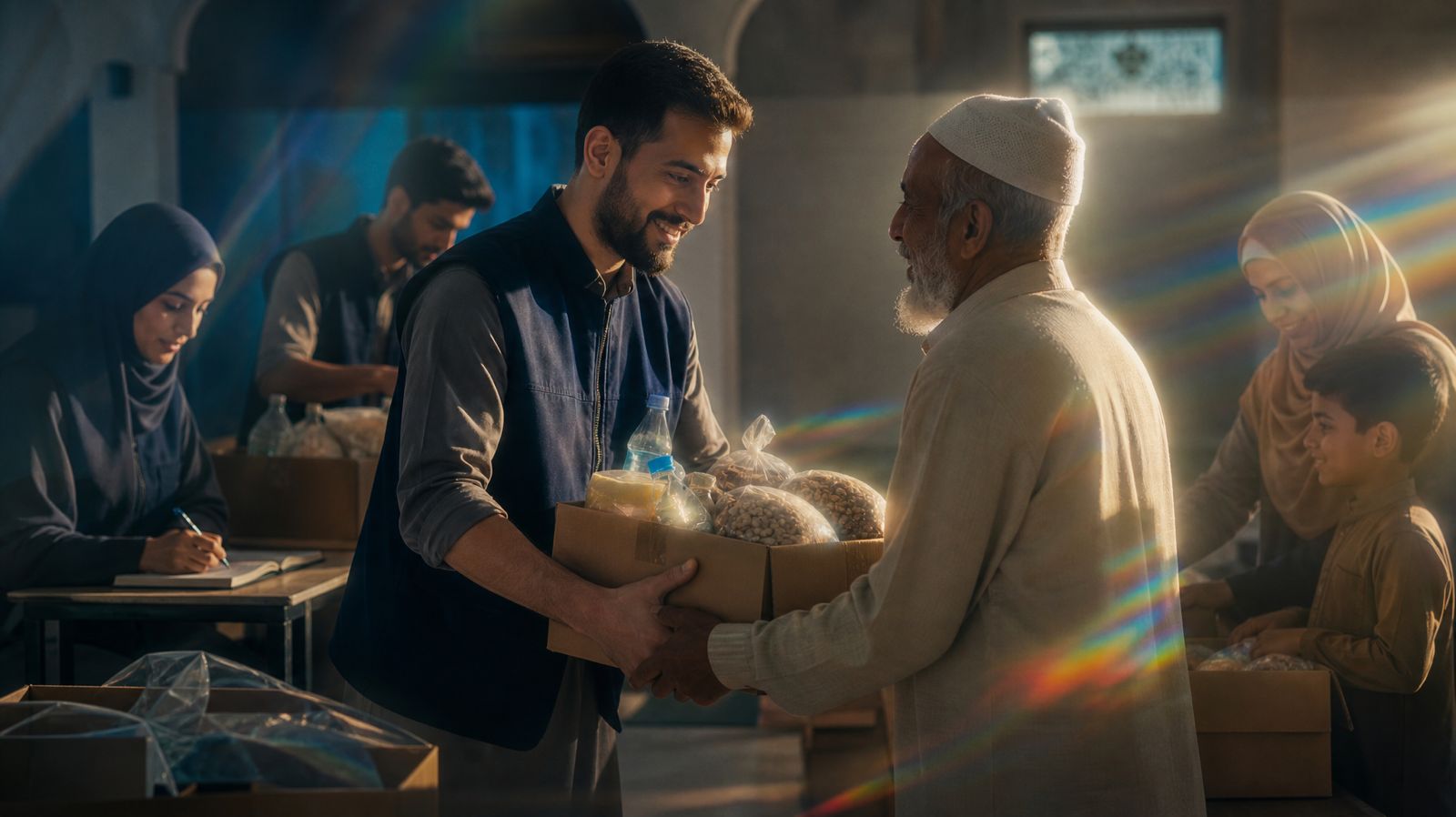
Charity in Islam is not limited to giving money. It includes giving your time, your skills, your effort, your knowledge and your compassion in the service of others.
For those who work within charitable organisations, welfare programmes and community initiatives, this means that even the administrative and operational work behind helping people can carry immense spiritual value when it is done sincerely for the sake of Allah.
Reflecting on the Quran and Sunnah
The Qur’an repeatedly encourages believers to give, support those in need and spend from what Allah has provided. Allah says:
“Whatever good you spend is for yourselves, when you spend only seeking the Face of Allah.” Qur’an 2:272
This reminds us that acts of charity do not only benefit the recipient. They also benefit the person giving, serving and facilitating that assistance.
The Prophet Muhammad ﷺ also taught that helping others is itself a form of charity. Acts such as assisting someone with a difficulty, guiding a person, removing harm and offering beneficial support can all be counted among charitable deeds.
For people working in NGOs, this gives everyday responsibilities a deeper meaning. Processing an application, verifying a beneficiary, preparing a food parcel, visiting a family, managing donations, helping a student or ensuring that resources reach the right person can all become acts of worship when accompanied by sincere intention.
Islam also places great emphasis on easing the hardship of others. The Prophet ﷺ taught that whoever relieves a believer of a difficulty in this world, Allah will relieve them of a difficulty on the Day of Resurrection.
This creates a powerful responsibility for organisations involved in welfare work. Every beneficiary is more than a record, application or case number. They are a person whose dignity must be protected and whose circumstances deserve compassion, fairness and care.
Charitable work also carries the opportunity for ongoing reward. When a person helps establish a programme, system, school, borehole, feeding scheme or other initiative that continues benefiting people, the positive impact may continue long after the original contribution was made.
This is one of the reasons UmmahAid exists.
Technology should not remove the human and spiritual element from charity. It should strengthen it.
By helping organisations manage beneficiaries properly, reduce duplication, maintain accountability and ensure resources reach those genuinely in need, UmmahAid aims to support the people who dedicate their lives to serving others.
Because behind every application processed, every parcel distributed and every family assisted is an opportunity to fulfil an amanah, ease someone’s hardship and seek the pleasure of Allah.
May Allah accept the efforts of everyone who gives, serves, volunteers and works for the benefit of others, and place barakah in every sincere act of charity. Ameen.

