
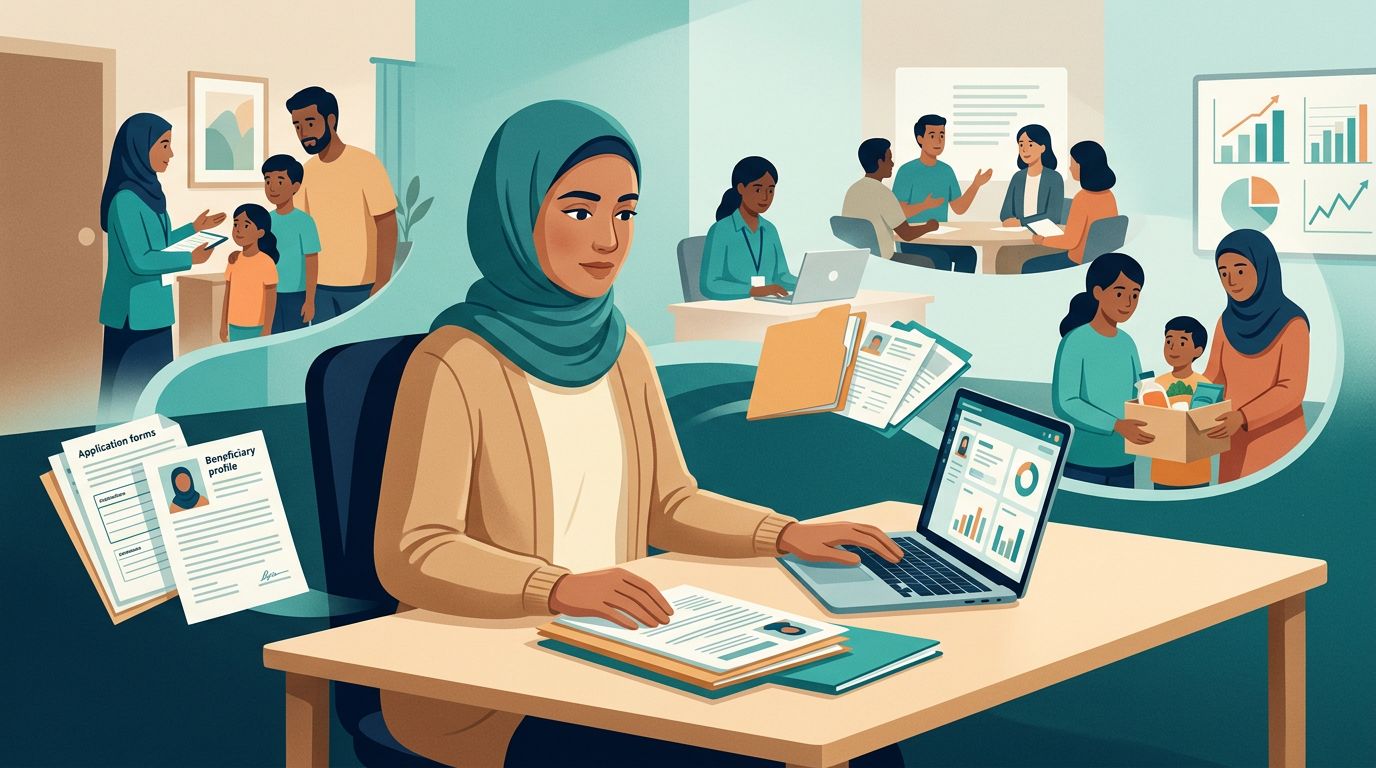
For many NGOs, beneficiary information is spread across forms, spreadsheets, emails, WhatsApp conversations and physical files.
While these tools may work individually, they often make it difficult to understand the complete journey of a beneficiary.
UmmahAid brings these processes together in one connected welfare management environment.
The efficiency we build
An organisation can capture an applicant, conduct assessments, record household relationships, manage supporting documents, allocate assistance, track inventory and monitor programmes without constantly moving between disconnected systems.
This creates a much clearer picture of every case.
Instead of simply knowing that an organisation distributed 500 food parcels, management can begin answering more meaningful questions: Who received them? Which programmes funded them? Which communities were served? Were the same households assisted previously? What other support are those families receiving?
This level of visibility improves both operational efficiency and accountability.
It also reduces repetitive administration. Information captured during an application can flow into assessments, reports, programme records and future applications rather than being repeatedly entered by different teams.
For organisations operating across multiple branches, this becomes even more valuable. Leadership can gain a consolidated view while individual branches continue managing their local operations.
The aim we have
Digital transformation for NGOs should not simply mean replacing paper with online forms.
It should mean creating a connected system that helps organisations understand beneficiaries better, coordinate resources more effectively and measure the real impact of their work.


